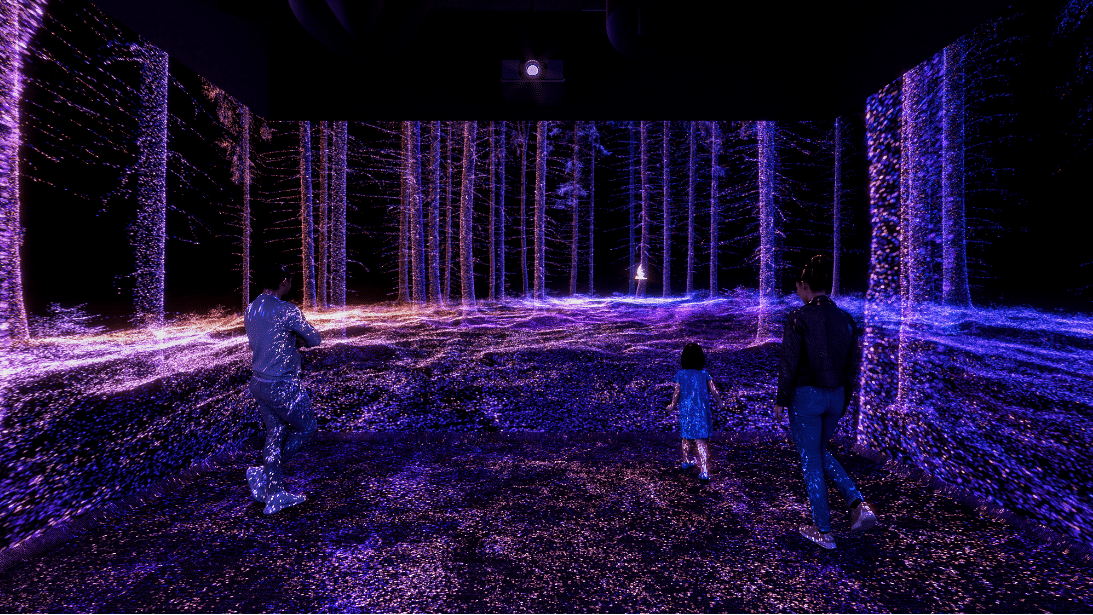
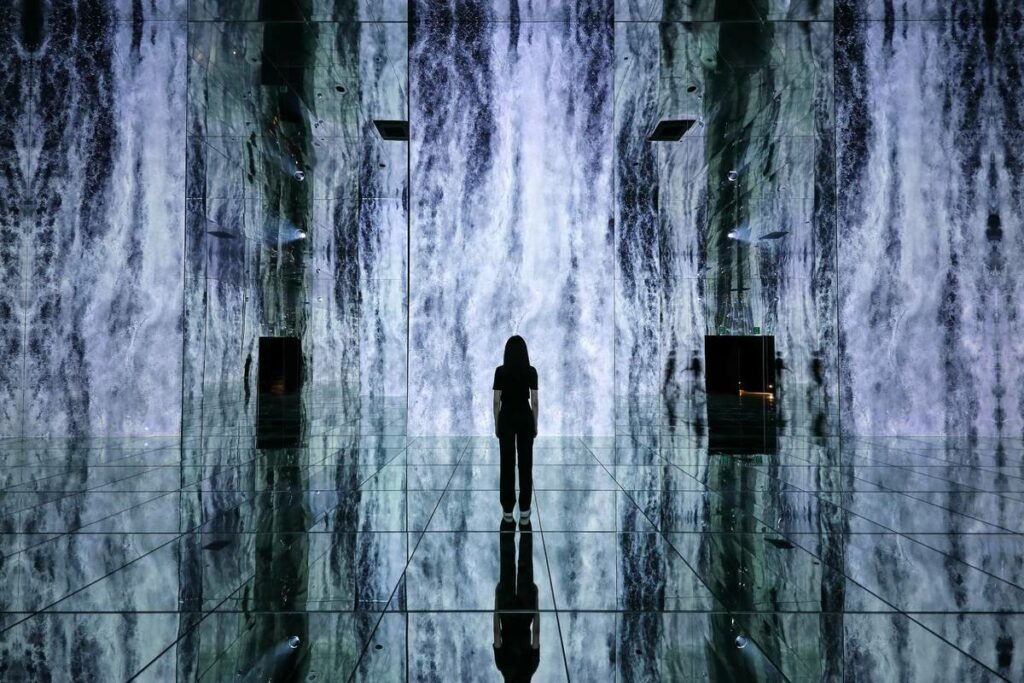
New York has a new sensory playground on the Hudson. ARTE Museum New York opened at Chelsea Piers (61 Chelsea Piers) on September 1, 2025, bringing 50,000 square feet of digital nature, spatial sound and custom fragrances, plus a tea bar positioned as part of the visit, not an errand on the way out.
If you’ve seen the feeds, you already know the images: rose blooms rolling across a black room, waterfalls that seem to breathe. But the more interesting shift is underneath the spectacle: scent, sound and hospitality are being used as interpretation, not as bolt-on perks. Time Out flagged the “evocative soundscapes and custom-crafted scents” in its preview. Secret NYC’s first look made the case that this is already a city destination, not a passing trend.
What, exactly, opened in NYC
- The offer: multiple rooms themed around “Eternal Nature,” with large-scale media art, spatial audio and room-specific scent. Operating hours currently run Mon–Thu 10:00–19:00 and Fri–Sun 10:00–21:00.
- The positioning: the official launch notes placed scent and sound at the core, alongside a hospitality layer (the ARTE Café/tea bar) designed to extend the experience.
- Early reaction: local guide coverage has been enthusiastic. Early visitor reviews cluster around keywords like “immersive,” “forest,” and “free lockers,” with a solid early rating profile.
Think of a series of big rooms where the walls and floors are screens showing landscapes: rainforests, oceans, night skies. As you move, you hear the space change around you (not just loud music, but sound that seems to come from places) and you smell subtle fragrances tuned to the scene. Midway, there’s a tea bar where you pause inside the “world,” not outside it. That pause isn’t a break from the experience, it’s a beat in the experience.
- If you’re used to museums as “look, read, move on,” this is “feel, linger, notice, remember.”
- If you’re used to pop-up “selfie rooms,” this is slower and more intentional.
Why it’s trending: people film well-lit rooms. They post them. Friends come. But they also stay longer because the place is designed to hold attention, not just flash it.
Why scent matters here (and not as perfume theater)
Smell routes to the limbic system more directly than sight or sound, which is why a trace of petrichor can yank you back fifteen years faster than any caption can. Reviews and overviews in the research literature have tied olfaction to emotional memory and cross-modal effects for decades. Newer work keeps stacking evidence that olfactory cues modulate recall and even attention.
Imagine a movie with a soundtrack you can smell.
Your brain wires smell straight into the emotion-and-memory centers with fewer detours than sight or sound. That’s why one whiff of petrichor can shove you back to a childhood summer faster than any photograph.
What that does: it marks chapters in your head without words. Later, when you recall the visit, those scents help you retrieve the “chapter” and the feeling tied to it. Wall labels can’t do that. Scent can.
ARTE’s rooms use that logic. Fragrance signals transitions, dials arousal up or down and gives each gallery a recognizable “signature” visitors carry with them after they leave. That’s interpretation doing work, not special effects.
Sound as pacing, not instruction
Spatial audio guides flow without bossing anyone around. Low-frequency beds set the emotional floor, directional cues tilt attention, silence gives the visuals room to land. The net effect, described in multiple previews is that visitors feel led rather than lectured, which is exactly where modern interpretation wants to be.
A good museum soundscape is like good stage lighting. You only notice it when it’s wrong.
Instead of blasting a soundtrack, spatial audio places sound in the room so it nudges your pace:
- Low, steady tones slow you down and make you look longer.
- Brighter, higher sounds pull you toward something.
- Silence is on purpose; it lets a scene “land.”
What that does: people move together in a calmer way, they don’t crowd the same corner, and they report “I felt like I was inside it,” not “I was told what to do.”
Hospitality inside the arc
The on-site tea bar is part of the storytelling rather than a bolt-on café. Placing hospitality within the journey creates a deliberate pause that resets attention and extends dwell time at the right moment, which is why so many visitors mention it in roundups and guides. It’s also becoming a reference for how cultural venues weave care and comfort into narrative design.
Think of a play with an intermission placed at exactly the right time. You stretch, you talk and the second act hits harder.
Putting a tea bar inside the exhibition gives your senses a reset right when your attention would normally flag. The warmth, the subtle aroma, the change in texture all say “pause here.” Then you go back in and notice more.
What that does: longer visits, yes, but also better visits. People remember more because the experience respected their bandwidth.
What this reframes for museums and cultural venues
We used to mean “presence” as “stand in front of the original.” That still matters. But presence can also be built with environment: light gradients, air movement, sound fields and scent signatures that make a room feel like time is thicker inside it.
Simplest definition: presence is the difference between “I saw something” and “I was somewhere.”
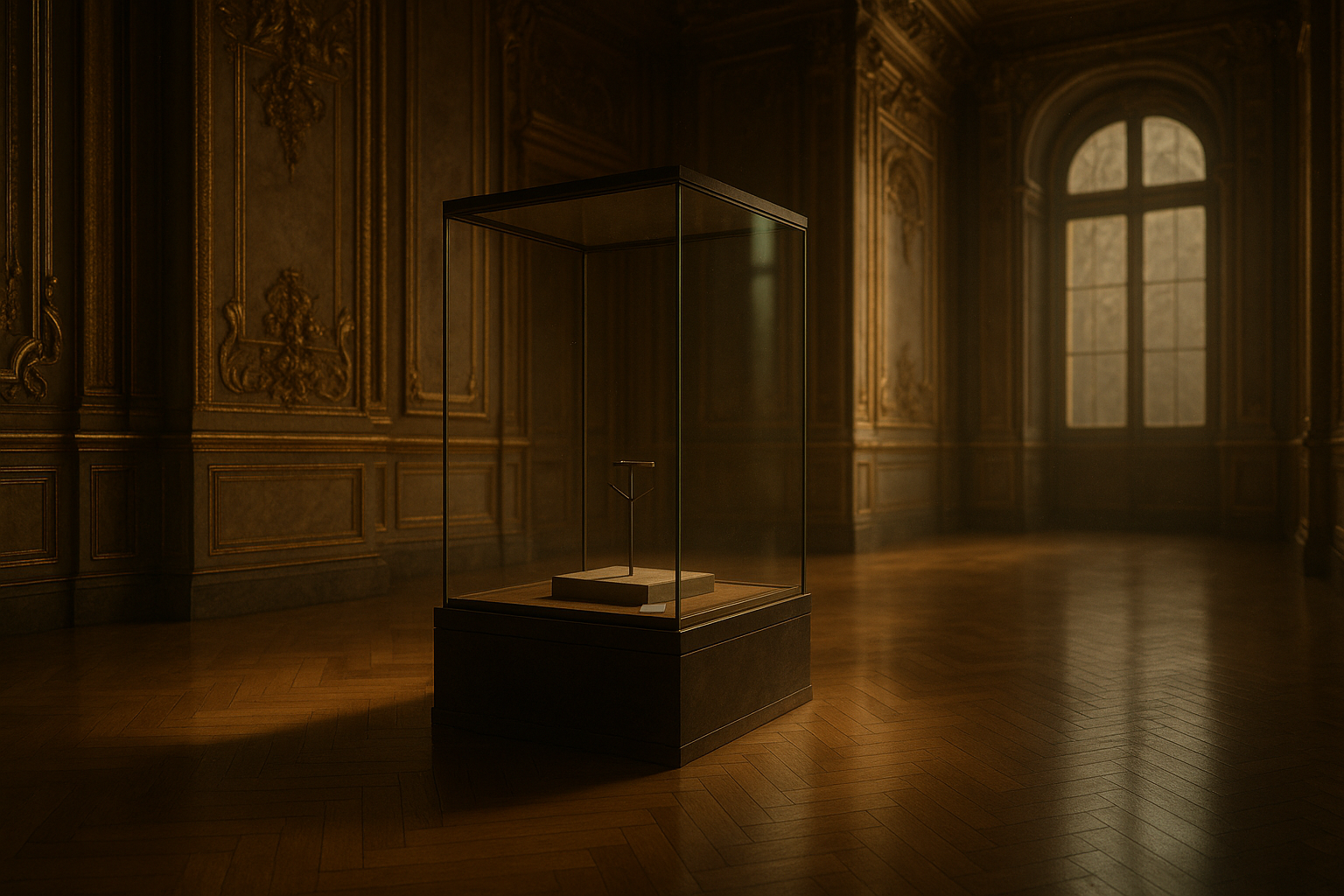
If ARTE Museum New York is today’s cleanest example of scent + sound + hospitality in a cultural frame, we’re building tomorrow’s variations with a deeper historical brief and the same commitment to presence that lingers.
If this way of making meaning resonates, keep an eye on this space. We’ll share a short note on how we map scent and pace rooms in our next experience, the useful bits, not the hype. If you prefer it in your inbox, one quiet email when it’s ready is enough.